

When I was growing up, my family wasn’t particularly adventurous when it came to the dinner table. We relied on a foundation of Italian American and French classics for most meals; my dad could make a two-day opera-soundtracked production out of even the most basic pasta sauces (an early lesson in marketing). So when I got to the Bon Appétit Test Kitchen in 2011, my culinary education was still just beginning—I couldn’t have told you the difference between cumin and coriander.
Tucked away in my old cubicle-size kitchen station, recipe by recipe, I was taken inside the minds of hundreds of pro chefs and developers. I could see the way layers of ingredients formed the building blocks of flavor, and how umami—that all-important sense of savory richness—could be hot-wired into recipes for nearly instant impact. Making and tasting dishes like Hot Joy restaurant’s Crab Fat–Caramel Wings, coated in savory crab paste and fish sauce caramel, and Mission Chinese Food’s Mapo Tofu, laced with fermented black beans and chiles, were my graduate degree in cooking.
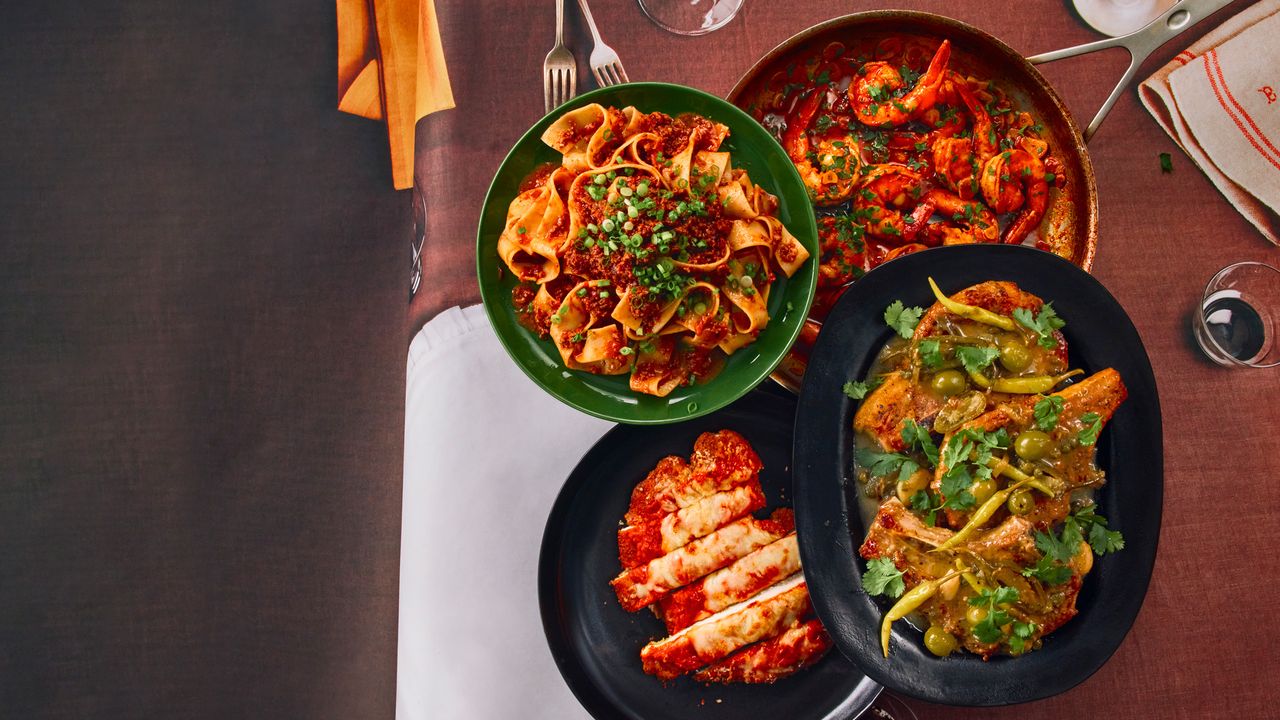
By the time I became a parent, my home cooking was a far-ranging playbook that incorporated all kinds of pantry ingredients in pursuit of umami. I always maintained a deep fondness for the Italian American comfort foods of my youth and set about recreating them according to how I learned to cook in the Test Kitchen (sorry, Grandma!): with funk, zing, depth, and heat. I seek fast-acting amplified flavors and don’t hesitate to stir a spoonful of gochujang into marinara or toss pickled chiles into puttanesca sauce for pork chops. These dishes below might not follow my nonna’s rules for Italian American cooking, but to me they still taste like home.
I am just as likely to reach for gochujang as chile flakes when layering heat into marinara sauce for chicken parm. Gochujang goes beyond spiciness—its deeply fermented soybean flavor adds exceptional funk. If you are new to it, think miso plus chile peppers and you won’t be far off. I tend to look for the Sempio brand when out shopping, but most are perfectly great and remarkably similar to one another. If it is your first time buying gochujang, Lucky Foods makes a 4-oz. squeeze tube of its Seoul Gochujang, which is easy to reseal between uses, minimizing any oxidation. Any paste will darken over time and dry out slightly but it takes many months, by which point you will no doubt have found ways to work it into your soups, sauces, dressings, and condiments.

Sempio Gluten-Free Gochujang
Source link